1871: The Founding of the Organisation
The Preußische Königliche Mechanisch-Technische Versuchsanstalt (Prussian Royal Laboratory for Mechanical Testing) within the Königliche Technische Hochschule (Royal Technical University) in Berlin was the predecessor of today's Federal Institute for Materials Research and Testing (BAM). The organisation’s mission was to conduct mechanical tests of materials and other tests that were of general scientific and public interest.
1880: Adolf Martens’ Microscope
In collaboration with the Franz Schmidt & Haensch, Berlin and Carl Zeiss, Jena companies, Adolf Martens developed a metallographic microscope, which enabled him to study the microstructure of grey cast iron and steel with precision. Portrait of Adolf Martens and the graphic of a microscope Source: BAM

1889: Testing of Explosives
The Prussian War Ministry founded the Zentralversuchsstelle für Explosivstoffe (Central Testing Office for Explosives) in 1889 to advise the Prussian army on all chemical and physical questions about cartridge and explosives technology. The institute was renamed Versuchsstelle für Sprengstoffe (Testing Office for Explosives) in 1896 and Militärversuchsamt (Military Testing Office) in 1897.
1894: Hydrogen Explosion and the Beginning of the Modern Failure Analysis
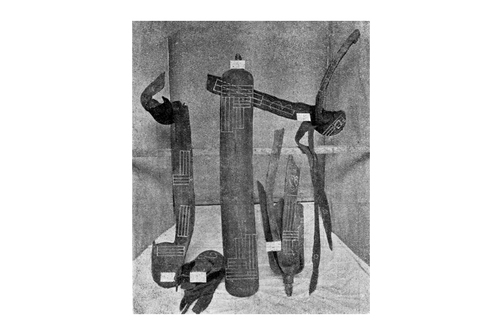
About 70 compressed gas cylinders filled with hydrogen exploded on the 25 May 1894 on the Berlin Tempelhof landing area for airships. Heavy fragments were found within a 1500 metre radius. The Prussian military commissioned the Royal Prussian Mechanical and Materials Testing Institute headed by Adolf Martens to determine the cause of damage. This marked the beginning of systematic failure analysis, as it is currently carried out at BAM. Hydrogen Explosion and the beginnings of modern damage analysis Source: BAM